KAUN: RAM GOPAL VARMA AND ANURAG KASHYAP’S UNRECOGNIZED GEM OF THE 90’s
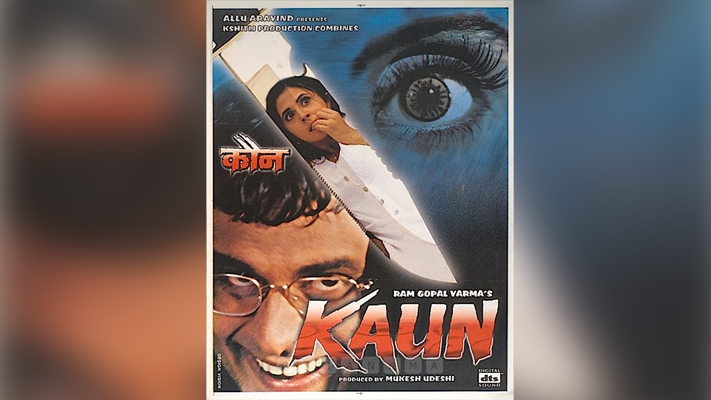
In a sea of lavish, extended thrillers dominating screens, Ram Gopal Varma’s 90-minute masterpiece “Kaun” remains a shining anomaly. Released amidst the glitz of Hum Saath Saath Hain, Biwi No 1, and Hum Dil De Chuke Sanam, this minimalist gem failed to garner its deserved spotlight. The allure of web series, with their expansive narratives, can often lose...
In a sea of lavish, extended thrillers dominating screens, Ram Gopal Varma’s 90-minute masterpiece “Kaun” remains a shining anomaly. Released amidst the glitz of Hum Saath Saath Hain, Biwi No 1, and Hum Dil De Chuke Sanam, this minimalist gem failed to garner its deserved spotlight.
The allure of web series, with their expansive narratives, can often lose steam over lengthy binge sessions. Yet, there’s an undeniable charm to a tightly-wound thriller film, and “Kaun” stands as a testament to this. Varma’s “Kaun” defies expectations from the outset. Made on a shoestring budget, the film boasts a cast of just three actors, nameless characters, and a stark absence of outdoor scenes or songs—a daring move in the 90s. But it is precisely these unconventional choices that lend “Kaun” its enduring eeriness.
Urmila Matondkar shines as the vulnerable woman alone at home, terrorized by the enigmatic Manoj Bajpayee seeking refuge from the rain. With persistent doorbell rings and eerie appearances at windows, Bajpayee’s character unfolds as a disturbing yet cunning intruder. Enter Sushant Singh, disguised as a police officer but revealed to be a thief, and the stage is set for a gripping cat-and-mouse game, culminating in two shocking murders.
In the midst of this tense narrative, Urmila’s character emerges as a symbol of purity, clad in white—a stark contrast to the morally murky personas of Bajpayee and Singh. Varma’s genius lies in the subtle breadcrumbs scattered throughout the film: a dead white cat, Urmila’s haunting dreams, and ominous news reports of a psychopathic killer.
But it’s the masterful orchestration of sound by composer Sandeep Chowta that truly elevates “Kaun” to cinematic brilliance. Thunderclaps, rain-soaked silences, and haunting background scores form a palpable, ghostly presence, almost becoming the fourth character of the film.
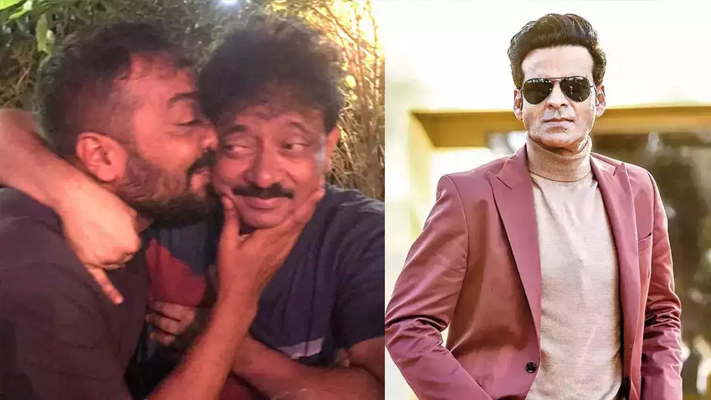
Varma, in collaboration with Anurag Kashyap as writer, reunited much of the Satya team for “Kaun,” including the formidable duo of Matondkar and Bajpayee. Yet, despite the film’s solid foundation, “Kaun” failed to find its place in the bustling 90s Bollywood scene.
In a year dominated by love stories and family dramas, “Kaun” struggled to shine. But its legacy endures as a masterclass in the horror-thriller genre. Today, amidst the resurgence of thrillers, “Kaun” stands as a hidden gem waiting to be rediscovered—a testament to Varma and Kashyap’s uncompromising vision and a stark reminder of the unpredictable nature of cinematic success.
IT WAS NOT EASY TO DANCE WITH 30-40kg COSTUME IN PERIOD FILMS
Bollywood is celebrated for bigger than life motion pictures over the world, so also our motion pictures are known for huge time enthusiastic, family values, music, colours & ofcourse it’s ensembles. Indian film ensembles are world famous. Every on-screen characters looks flawless with overwhelming ensembles but at the same time it’s not simple to carry such overwhelming stacked stuff. There...
Bollywood is celebrated for bigger than life motion pictures over the world, so also our motion pictures are known for huge time enthusiastic, family values, music, colours & ofcourse it’s ensembles. Indian film ensembles are world famous.
Every on-screen characters looks flawless with overwhelming ensembles but at the same time it’s not simple to carry such overwhelming stacked stuff. There are few stories behind these costume’s.
Aishwarya Rai Bachchan wore a add up to of 40 kg gems amid the complete motion picture (Jodha Akbar).
Madhuri Dixit wore a 30-kg lehenga for Kaahe Chhed Mohe in Devdas. Her equip was planned by Abu Jani and Sandeep Khosla. Too, most of Madhuri and Aishwarya Rai Bachchan's ensembles in this film taken a toll the creators around Rs 10-15 lakhs.
Deepika Padukone in Bajirao Mastani wore a 20 kg shield suit for a battle scene.
The performing artist wore a 30 kg ghagra in Goliyon ki Raasleela: Slam Leela. Her equip was outlined by Anju Modi and was 50 meters long. Too, the one ensemble that gathered the foremost consideration was the one she worn within the Ghoomar tune from the film Padmaavat.
According to reports, the equip weighed around 30kgs and the adornments for the tune was lovely. It had taken over 200 craftsmen, 600 days and 400 kg of gold to induce the pieces right for the tune.
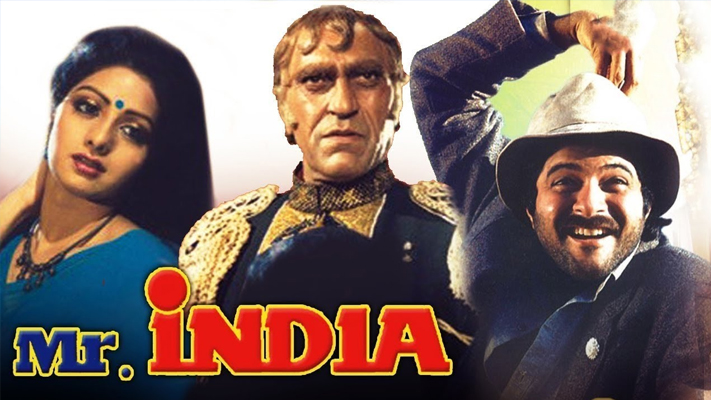
Reason Behind Satish Kaushik Rejecting Aamir Khan for ‘Mr. India’
Picture this: a young Aamir Khan, bursting with Bollywood dreams, boldly steps into the world of Shekhar Kapur’s Mr India. Little did he know, he was about to face a twist in his journey! In an epic interview saga, Aamir spilled the beans on the time he tried impressing Satish Kaushik, who was not just the chief assistant director but...
Picture this: a young Aamir Khan, bursting with Bollywood dreams, boldly steps into the world of Shekhar Kapur’s Mr India. Little did he know, he was about to face a twist in his journey!
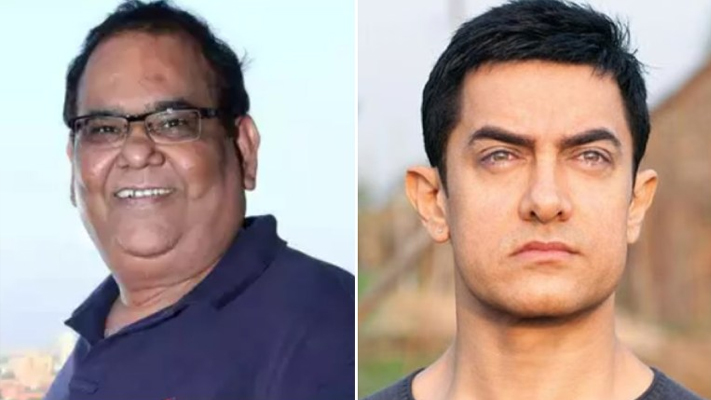
In an epic interview saga, Aamir spilled the beans on the time he tried impressing Satish Kaushik, who was not just the chief assistant director but also the gatekeeper to Aamir’s assistant director dreams. Cue the dramatic music!
Our hero, armed with impressive paperwork (apparently a rare feat in the industry back then), showcased his skills. “I had gone and met Shekhar Kapur because he was one of my favourite directors. So I told him that I want to work with you as an assistant. At that time, Satish Kaushik was his chief assistant director,” Aamir narrates, setting the scene.
Now, here comes the plot twist! Satish Kaushik, ever the discerning boss, was left in awe of Aamir’s paperwork magic. But, oh boy, Aamir’s charm didn’t quite clinch the assistant director role. Why? Well, it turns out Satish, the captain of the ship, had his eyes set on something unexpected – a car! Yep, you read it right.
In the grand reveal, Aamir learned, “Later Satish told me that when you had come for a meeting with me, you came in a car, and I didn’t have a car. So, I felt that the junior who I will hire has a car.” Talk about a plot twist worthy of a Bollywood blockbuster!
Ever the quick-witted hero, Aamir tried to reason that the car wasn’t actually his. But, alas, destiny had other plans, and Aamir missed out on being the assistant director of Mr India.
So, there you have it – the tale of Aamir Khan’s ‘car-mical’ audition for Mr India. Who knew a four-wheeled companion could decide the fate of a Bollywood dream? As Satish Kaushik soared to fame, Aamir Khan’s adventure in the film industry took a different route, leaving us with a story that’s as entertaining as any Bollywood flick. Cue the applause!
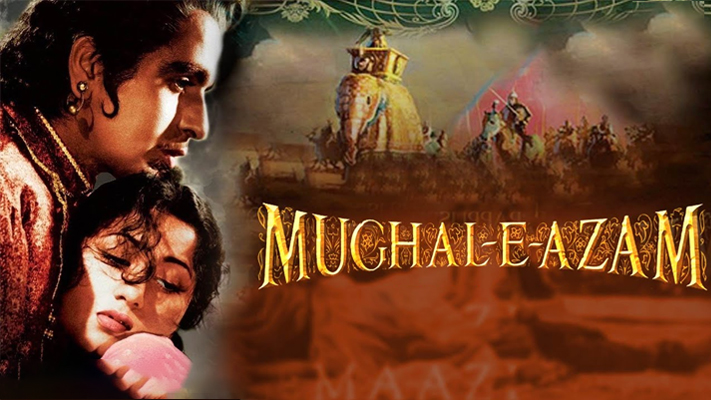
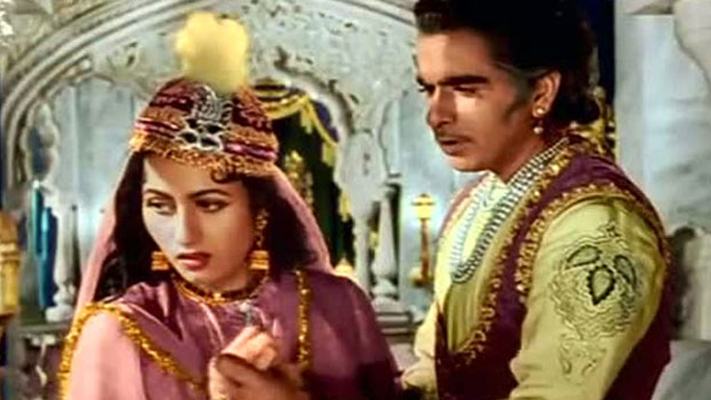
Dilip Kumar’s Mughal-e-Azam – The First Bollywood Film Shot in Three Languages
Dilip Kumar’s “Mughal-e-Azam”, released in 1960, holds a special place in the history of Indian cinema as the first Bollywood film shot in three languages. Directed by K. Asif, the magnum opus, featuring Prithviraj Kapoor, Madhubala, and Dilip Kumar, began its ambitious journey in 1944 and faced numerous challenges before making it to the big screen 16 years later. This...
Dilip Kumar’s “Mughal-e-Azam”, released in 1960, holds a special place in the history of Indian cinema as the first Bollywood film shot in three languages. Directed by K. Asif, the magnum opus, featuring Prithviraj Kapoor, Madhubala, and Dilip Kumar, began its ambitious journey in 1944 and faced numerous challenges before making it to the big screen 16 years later.
This cinematic masterpiece, initially released in black-and-white, achieved iconic status and, in 2009, underwent a re-release in colour print. The film’s timeless narrative, coupled with its opulent production, resonates with audiences even today, making it a cult classic in the period drama genre.
What sets Mughal-e-Azam apart is the lesser-known fact that it was a trilingual film, shot in Hindi, Tamil, and English. While the Hindi version soared to great heights, the Tamil version met with an unexpected setback at the box office, leading to its commercial failure. Surprised by this turn of events, the makers decided not to release the English version, abandoning the idea altogether.
The film’s journey, marked by hurdles and triumphs, reflects the dedication and vision of its creators. Despite facing challenges, Mughal-e-Azam remains an enduring masterpiece, with every aspect of the epic, from its dialogues to its songs, holding a special place in the hearts of film enthusiasts. This trilingual experiment, although not without its setbacks, adds another layer to the rich tapestry of Mughal-e-Azam’s cinematic legacy.
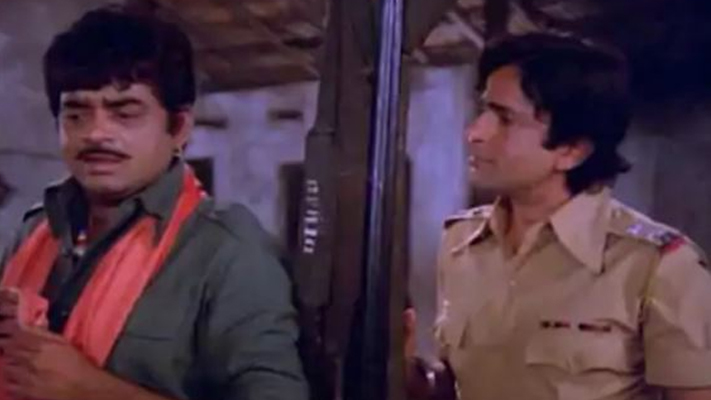
THIS WAS THE REASON WHY SHASHI KAPOOR CHASED SHATRUGHAN SINHA WITH A BELT IN HAND
Lights, Camera, Action! Let’s dive into some spicy Bollywood trivia that’s juicier than your favorite gossip magazine! Did you know that once upon a time, the legendary Shashi Kapoor went on a chase through the sets with a belt in hand? And who was the target of his playful fury? None other than the ever-charming Shatrughan Sinha! Seems like our...
Lights, Camera, Action! Let’s dive into some spicy Bollywood trivia that’s juicier than your favorite gossip magazine!
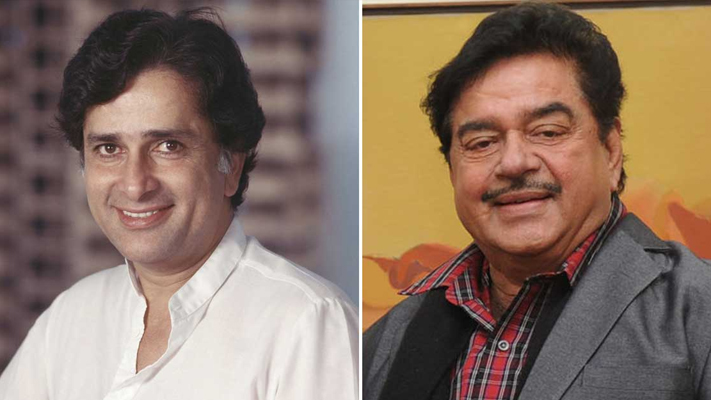
Did you know that once upon a time, the legendary Shashi Kapoor went on a chase through the sets with a belt in hand? And who was the target of his playful fury? None other than the ever-charming Shatrughan Sinha!
Seems like our dear Shatrughan had a bit of a punctuality problem. He had a knack for strolling onto set fashionably late. But oh boy, did it get him into trouble when Kapoor decided enough was enough!
Picture this: Kapoor, belt in hand, hot on Sinha’s heels, all in good fun, of course! Sinha, always the quick wit, turned the whole debacle into a joke, teasing Kapoor about their casting choices.
But behind the scenes drama aside, Sinha had a valid excuse for his tardiness. He was a dedicated yogi, starting his day with a zen-inducing hour of yoga. Can’t blame a guy for wanting to find his inner peace, right?
Despite his fashionably late entrances, Sinha was a director’s dream. With his sharp memory and talent, he breezed through scenes in one take. No wonder directors couldn’t get enough of him!
But wait, there’s more! Sinha spilled some tea about his regrets too. He wished he could have buried the hatchet with the late Rajesh Khanna over their political disagreements. Ah, politics, always stirring the pot!
And that, my friends, is the tale of the Bollywood belt chase! Full of humour, camaraderie, and a dash of regret. Who needs scripted drama when you have Bollywood, the real showstopper!